 Every cook has worked a station under someone who made you dread asking a question. You’d hesitate before you even opened your mouth because you knew what was coming: the sigh, the eye roll, the “just watch me” while they moved twice as fast as necessary to make the point. Asking meant you weren’t cut out for it. So you stopped asking. You just nodded, said “yes, chef,” and tried to figure it out through osmosis and fear.
Then, if you’re lucky, you work for someone else. And it’s completely different.
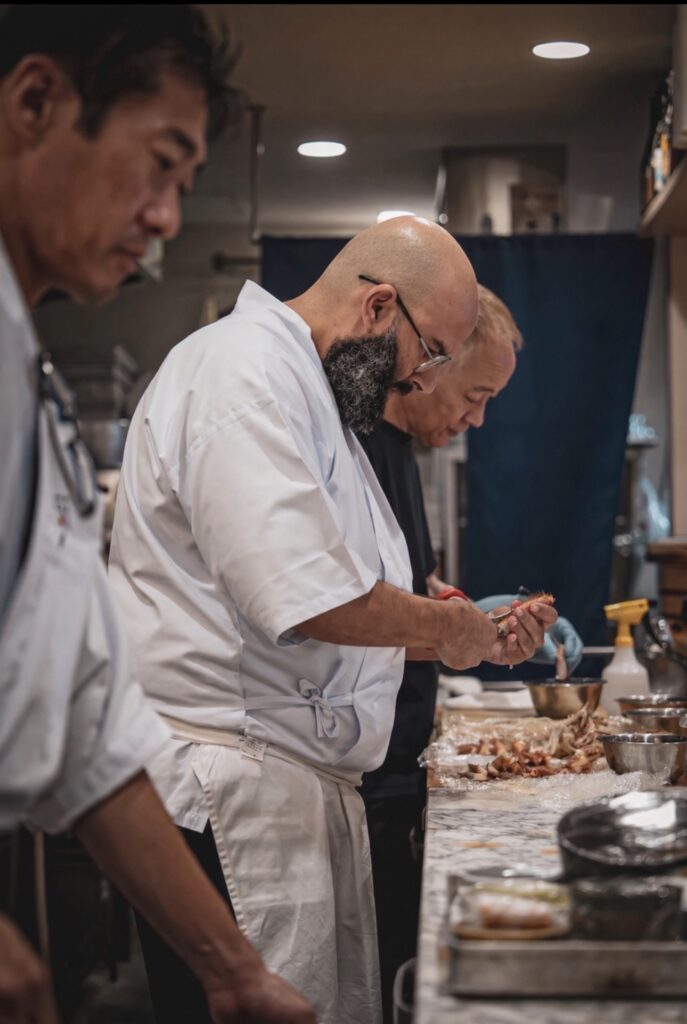
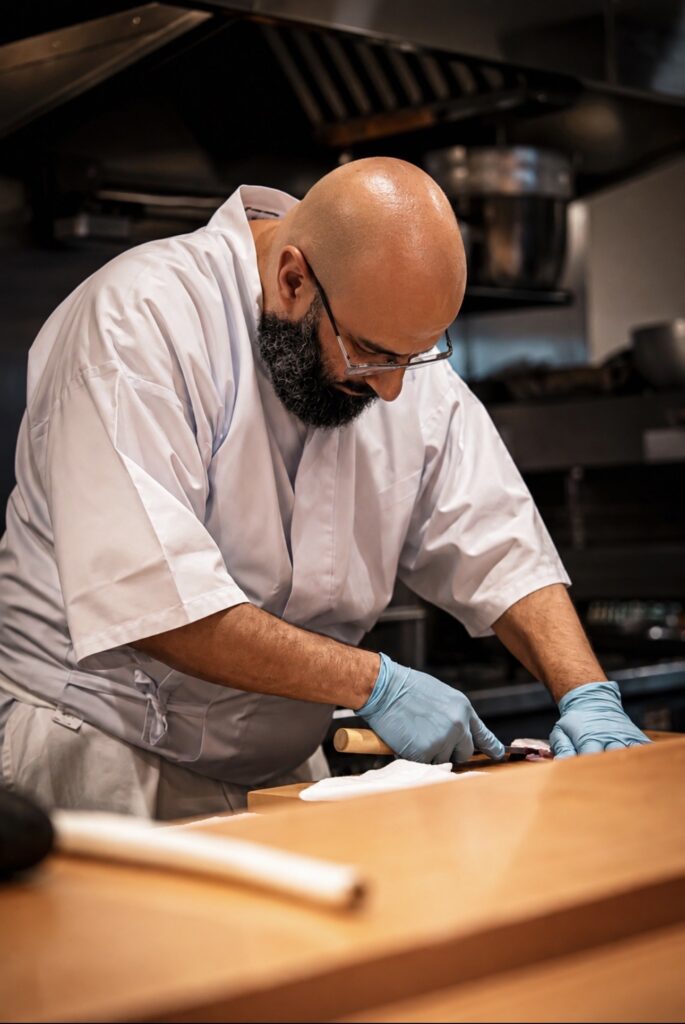
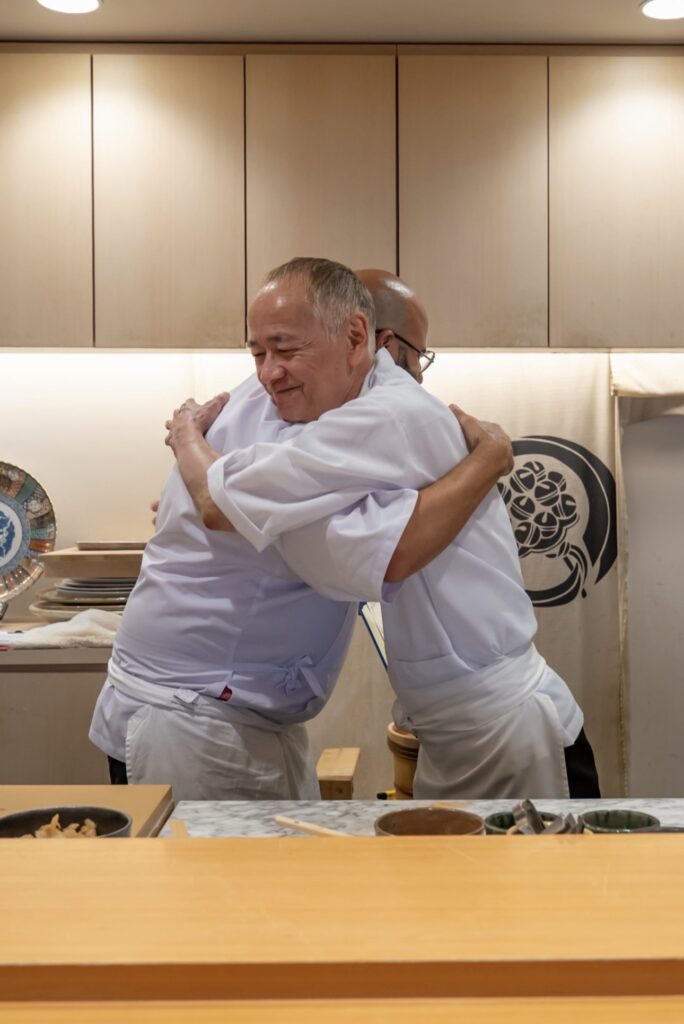
I recently spent time in the kitchen with a master sushi chef, watching him work a craft he’s spent decades on, the exact pressure of his hand on rice, the pause before a cut that most people would never even clock. What got me wasn’t the technique, as sharp as it was. It was what happened every single time i asked him something, even something small and obvious, the kind of question you’d normally eat before you said out loud. His whole face lit up. Like the question was the best part of his day. Decades on the block, and he still got genuinely fired up that someone wanted to learn.
Anyone who’s spent time on a line knows exactly what the opposite looks like. The chef who guards the recipe like it’s a state secret. The sous who “doesn’t have time” to explain why, only what. The kitchen where asking a question gets you labeled as slow, instead of someone trying to get better.
Here’s the thing that’s easy to miss when you’re new and just trying to survive service: That behavior isn’t confidence. It’s the opposite. People who are still insecure about what they know are the ones who guard it the hardest because a question feels like a threat to the one thing holding their position together, being the person who knows and you don’t.
The chefs who are actually that good don’t have that problem. They’ve got nothing left to prove. Explaining a technique for the hundredth time doesn’t cost them anything, because their skill isn’t a secret they’re protecting anymore. It’s just who they are. If anything, teaching it back to a new cook is what keeps it sharp for them, too.
Once you’ve worked under both types, you start clocking it fast.
The chef who tells you why, not just what: Anyone can say “more salt.” The ones worth staging under tell you why the dish needed it, what it’s doing to the other components, and what happens if you get it wrong—because they want you to actually understand the plate, not just replicate it.
The sous who wants the questions: Not one who tolerates them between tickets, but actually wants them. A cook asking “why do we do it this way” is a cook who’s thinking about the food, not just following steps to get through the shift.
The chef who could leave for a week and the kitchen wouldn’t fall apart: That’s not an accident. That’s a kitchen built by someone secure enough to train people properly instead of keeping everyone just competent enough to need them.
This isn’t about running a soft kitchen or going easy during service; the pressure and the standards can still be brutal. It’s about what happens the second someone shows they actually want to learn. Does that get met with energy, or with contempt?
It’d be easy to turn this into some generic “be nicer to your cooks” advice. That’s not really it, and it undersells what I actually watched happen in that kitchen. It wasn’t patience; plenty of chefs can fake patience for a shift. It was real excitement. There’s a massive difference between a chef who answers your question without making you feel small and a chef whose face actually lights up because you asked.
That reaction is hard to fake and even harder to build. It takes actually believing that a cook getting better doesn’t threaten your spot, it makes the whole kitchen better, including you. That’s not the culture most people come up in. A lot of cooks get trained in kitchens built on fear and hierarchy, where information gets hoarded because it’s the only leverage some people have. Unlearning that takes working under someone who runs it differently.
That’s the real value of staging under a master, wherever you find one. You’re not just picking up knife skills or plating technique. You’re picking up how they treat the moment someone asks for help, and eventually, if you’re paying attention, that becomes how you treat your own line.
A chef who is unable to share what they know eventually gets brittle, threatened by anyone coming up behind them, protective of a position instead of proud of the food. A chef who teaches freely just keeps getting better, because every question from a young cook is a reason to look at their own technique again or an opportunity to learn something new.
The best chefs are the ones who can’t wait to hand their knowledge down to the next generation.
That’s the kind of kitchen worth building, one where the food is still exceptional, and nobody has to be afraid to ask why.