In my opinion, there is no experience like cooking a steak dinner for 5,000 soldiers in the middle of the Mojave Desert using two MKTs, or Mobile Kitchen Trailers. Mind you, these trailers had to be joined together just to handle the workload.
That meal was one of the most important meals the military could serve to the troops. Everyone looked forward to it, especially after a long, hard, blistering day of training that had pushed them to their physical limits.
Some of you veteran chefs probably know exactly what I’m talking about. Maybe you’ve even been there yourself. If you were a military cook, it certainly gave new meaning to the phrase, “If you can’t take the heat, get out of the kitchen.”
I’ve been in the culinary industry for most of my life, starting as a busboy at 15. That was 33 years ago, and so much has changed since then, not just in the industry, but in me as I’ve continued this journey. Even now, I’m still learning, still growing and still loving the job I get to do every day.
This industry can wear people down. Some develop a love-hate relationship with it. Others see cooking as simply a job that pays the bills. I’d like to think that, for most of us chefs, it’s something much deeper. We embrace the passion behind creating a meal someone will never forget.
There’s nothing quite like hearing someone tell me how much they enjoyed something I created. Hearing the words, “That’s the best I’ve ever had,” reminds me that I’m exactly where I’m supposed to be.
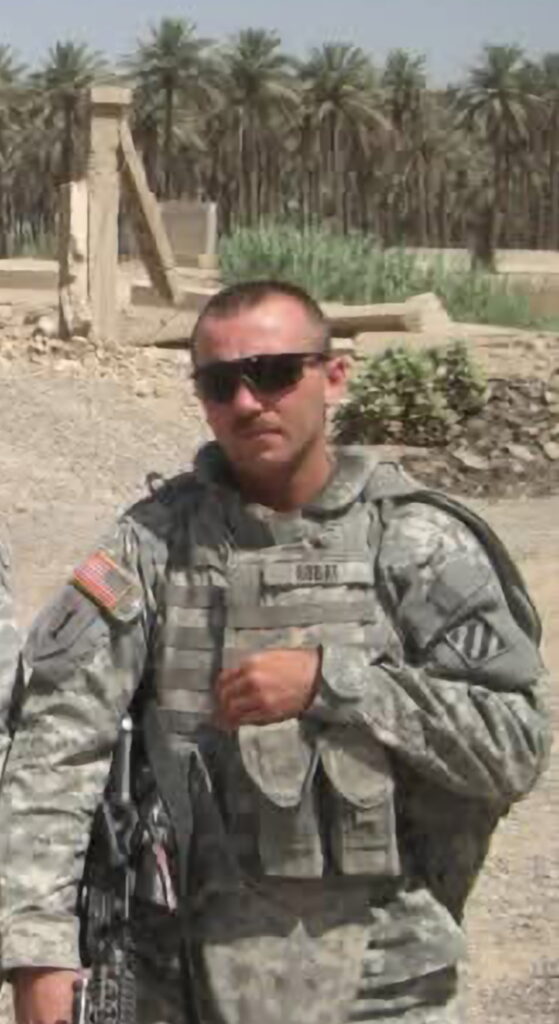
I joined the United States Army in December 1999 and served honorably until July 2012 as a 92G Food Service Specialist.
There is a world of difference between cooking for soldiers and cooking for members or guests. The standards are completely different, but not in a bad way.
The military is built around feeding large numbers of people using standardized recipes that must always be followed. Creativity is limited because of nutritional requirements, dietary guidelines, logistics and calorie intake. Every meal is designed to be balanced, nutritious and capable of sustaining soldiers so they’re always ready for the fight.
On the civilian side, cooking becomes much more personal. A chef has the freedom to explore techniques, flavors and creativity without the rigid limitations of military food service. Your imagination becomes your greatest tool, and your only real limitation is how far you’re willing to push it while creating an unforgettable dining experience.
Sure, you’ll see some of the same equipment in both kitchens, including combi ovens, industrial kettles and steamers. But never once in the military did I use a sous vide machine or cook in a brick pizza oven. We never served charred octopus, and omelets were made on flat tops instead of individual omelet pans.
And yes, sometimes we really did use powdered eggs.
I knew from a very young age that I wanted to become a chef. I also knew joining the Army would open doors and provide opportunities I couldn’t find anywhere else. What I didn’t know was just how far those opportunities could take me.
That part was entirely up to me.
I credit the United States Army for teaching me far more than how to cook. It taught me leadership, adaptability, how to overcome adversity, loyalty and, above all else, team building.
Those lessons extend far beyond the kitchen.
A good leader never asks people to do something they wouldn’t do themselves. When your team sees you willing to jump into the trenches alongside them, it inspires confidence and earns respect.
Adaptability means recognizing when things aren’t going according to plan and still finding a way to accomplish the mission. In our industry, that’s every day. Equipment breaks. Deliveries are late. Someone calls out sick. Guests arrive unexpectedly. Great leaders adjust without losing sight of the goal.
Loyalty means being there for your people, professionally and personally. Sometimes a cook doesn’t need criticism. Sometimes they just need someone willing to listen. Kitchens can be incredibly stressful places, and those moments matter more than we often realize.
Above everything else, this industry is about team building.
Show me a chef who has done everything alone.
You can’t. That chef doesn’t exist.
A great team will take you farther than talent alone ever could.
The military taught me how to build those teams, how to recognize strengths, develop weaknesses and put people in positions where they can succeed. One person’s weakness becomes another person’s strength, and together the team becomes stronger than any individual ever could be.
That’s the foundation of every successful kitchen I’ve ever been part of.
Every chef who has spent enough time in this industry understands how relentless kitchen stress can be. Maybe it’s an à la carte line that never slows down, an event calendar that never seems to end or the one oven that refuses to stay repaired, no matter how many times you call Chef Tech.
We get stressed. We get frustrated. Sometimes we even get angry. None of us are immune to it.
How we respond to that stress is what defines us as chefs and leaders.
I joke with my team during those chaotic moments when we’re completely buried. I’ll laugh and tell them, “Combat was easier.”
Of course, that statement isn’t exactly true.
I’ve been in combat several times, and I say it to remind them that today is simply a rough day in the kitchen. We’re going to get through it together.
Nothing will ever compare to dodging bullets, fighting for your life or surviving four roadside bombs. Those experiences changed the way I approach the kitchen forever.
I take my job very seriously, but when I look at a line that’s 10 tickets deep or a wall full of BEOs waiting to be executed, I find myself thinking, “So easy a caveman could do it.”
Or I’ll look at that event board and say to myself, “Is that it? That’s all you got?”
It’s not meant to minimize the importance of what we do. Every guest matters. Every meal matters. Every event matters.
It’s simply about perspective.
The mentality I developed through those experiences reminds me that you can’t bring me down. You won’t break my will. Drive on.
In the 33 years I’ve been in this industry, I’ve worked in almost every type of kitchen imaginable, from military dining facilities to restaurants, casinos, resorts, country clubs and, yes, even delis.
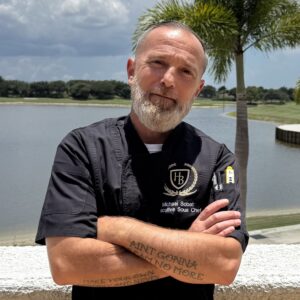
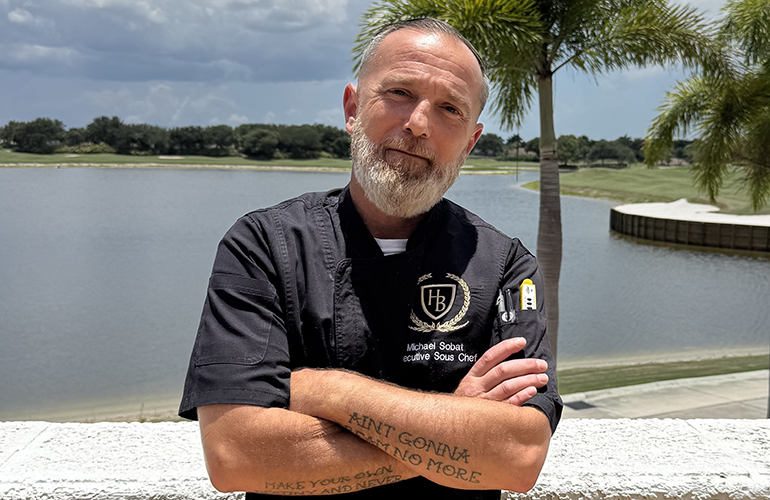
I’ve carried nearly every title this profession has to offer, from Shift Sergeant in the military to Executive Sous Chef today, all while chasing the one title that has remained just out of reach.
Executive Chef.
I have no doubt in my mind that this title will come. Not because I believe I’m entitled to it, but because I know how hard I’m willing to work for it.
My background and the way I was raised through the military tell me I cannot allow myself to stop pushing forward.
Most veteran chefs understand this mentality. The way we were trained, the way we were taught and the expectations placed upon us don’t allow us to accept failure easily.
In the military, we weren’t just cooks. We were soldiers, Marines, airmen, sailors and Coast Guardsmen. That identity taught us something much bigger than food service.
Failure could cost lives.
Thankfully, that is not the reality of a civilian kitchen. Nobody dies because a steak is overcooked or a sauce breaks. But the commitment, discipline and responsibility we developed never leave us.
If I were to judge myself honestly in my career, I’d say I’m a pretty good chef. I’m not a master at one single thing. Instead, I’ve always tried to become well-rounded and capable in every area of the kitchen.
Would I love to say I’m the best? Of course.
But the reality is, there is always room for improvement. There is always something new to learn. Our profession is constantly evolving. New technology, techniques, equipment and approaches are introduced all the time. The next generation of chefs will always have opportunities to push the boundaries even further.
Maybe I’ll never be the best chef in the world. That’s something I can live with.
I’m chasing growth.
The chef in me understands that. The soldier in me says I know how to adapt. I know how to learn. I know how to overcome adversity.
Maybe someday I’ll become that person who is simply better, not because I’m competing against everyone else, but because I’m competing against who I was yesterday.
Throughout my career, I’ve had the opportunity to meet several veteran chefs. It’s always a pleasure sitting down with them and hearing their stories, where they’ve been, what they’ve experienced and how they found their way through this industry.
The interesting thing is, most veteran chefs haven’t just been cooking. They’ve lived an adventure. They’ve been tested. They’ve been through what many of us would call “the suck.”
There is a unique bond between people who have experienced that kind of journey. Whether it was in the military, in the kitchen or both, we understand what it means to keep moving forward when things get difficult.
My own Executive Chef, Chef Vincent Capua, is a veteran himself, a Marine. I won’t call him a “former” Marine because, as they say, once a Marine, always a Marine. And I respect that.
His brother, Chef Anthony Capua, is also a Marine. It’s incredible that two brothers, both Marines, have gone on to become highly successful Executive Chefs in this industry.
They are also my friends, my brothers in arms and my mentors. They motivate me because they represent what determination, discipline and commitment can accomplish.
Above all, I love working alongside veterans in this industry. There is a level of respect and understanding that is different. The camaraderie between veterans is almost instant, as is the competitiveness.
My Executive Chef being a Marine and me being a former soldier continues to push both of us. I always tell him, “Whatever you can do, I can do better.”
He tells me the exact same thing.
We challenge each other constantly because we push each other to become better versions of ourselves.
Although, sometimes it might just be for bragging rights.
At the end of the day, it’s built on respect, friendship and wanting to see the other person succeed.
Every veteran has a natural desire to prove the branch they served in is the best. A Marine will say the Marine Corps is the best. A soldier will say the Army is the best. The same goes for every branch.
The truth is, it never really mattered what branch you served in. Soldiers, Marines, airmen, sailors and Coast Guardsmen were all on the same team. We all had the same mission.
That realization carries over perfectly into the culinary industry.
As chefs, it is our responsibility to build great teams. We are responsible for motivating, teaching and guiding the people who trust us to lead them. They look to us for direction and confidence. They look to us to set the example.
I will never claim to be the greatest leader in the world, but the military taught me to step up when leadership is needed.
So I do.
I’m waiting for my opportunity to come. When it does, I’ll be ready.
I won’t fail my team because failing them means failing myself. A team is only as strong as its weakest link, and as chefs and leaders, it is our responsibility to build everyone around us up.
It doesn’t matter where someone came from, how they started or their age, background or experience level. What matters is that they are part of your team.
Your responsibility is to lead, inspire, teach and support them.
Your team becomes your family. Without them, you probably won’t succeed. Without strong leadership, they may never reach their full potential.
That is what team building truly means.
It doesn’t matter if you’re running a resort in New York, leading a restaurant kitchen in Las Vegas or managing a country club in Naples, Florida. It doesn’t matter what uniform you wore, what kitchen you came from or what title you currently hold.
We are all part of the same industry. We are all working toward the same goal.
To create the most memorable dining experience a customer or member could ever ask for.