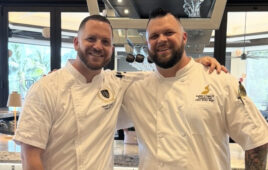
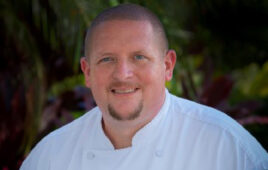
This is Part 2 of multi-part series by Drew Tait, Executive Chef of The Forest Country Club. Read Part 1 here.
Step Two: Create the Right Environment for Feedback
Once the groups have been established and the members selected, separate focus groups can be scheduled. Each group should be asked a series of specific questions, followed by open discussion that allows members to share additional thoughts and feedback.
However, there is one critically important factor: It must be honest feedback. To receive the most honest feedback possible, the focus group should be facilitated by someone who is not directly involved with the F&B team. This could be a board member, a committee member, a leader from another department, or another trusted individual who is independent of the dining operation.
The reason is simple: Members may hesitate to provide honest criticism directly to the people responsible for the dining program. They may worry about offending someone, damaging a relationship, or appearing overly negative.
If members do not feel completely comfortable speaking openly, the feedback may become polite rather than honest. Polite feedback is not useful feedback when establishing a clear identity for your food & beverage department.
If members are not comfortable telling you what they truly think, the entire exercise risks becoming a waste of time. The answers may not accurately reflect what members truly want, making it impossible to establish a meaningful Dining Identity. Creating a neutral environment allows members to speak freely. Honesty is essential.
Step Three: Ask Questions That Help to Reveal the Truth
You should strive to develop a list of questions that are designed to better understand how members currently see dining at the club and what they feel should change in the future. They should also help you understand what they believe the club does exceptionally well, what traditions should be protected, what experiences make the club unique, and what role dining plays in their overall membership experience.
Some questions we are considering include:
- When you think about dining at the club, what is the first thing that comes to mind?
- If our dining program were a person, how would you describe its personality?
- If dining at the club disappeared tomorrow, what would members miss most?
- What experience would make a member say, “This is exactly why I belong to this club”?
- What is the one word that should define dining at our club in the future?
- What role does dining play in your overall club experience?
- What do we do exceptionally well?
- What is our greatest opportunity for improvement?
Not everyone processes information in the same way. Some members respond best to direct questions. Others provide more insightful answers when asked to complete a sentence or imagine a future scenario.
Using different question formats can generate a much broader range of feedback that will be helpful to identify what is most important to them.
Ask members to complete statements such as:
- “Dining at our club should be the place where…”
- “Dining at our club makes membership worthwhile because…”
- “Dining at our club exists to…”
- “When dining at the club, members should feel…”
- “The future of dining at our club is…”
These questions often reveal emotional connections and aspirations that may not surface through traditional questions.
The ‘Front-Page Story’ is another powerful exercise to ask members to imagine the future. Imagine this: Five years have passed. It is now 2031. Your club’s dining program has become one of the most admired in the region. A major club industry publication has featured your club. Ask the members:
- What is the headline?
- Why is the club being recognized?
- What are members saying about the dining program?
- What did the club do differently to achieve this success?
- What experiences are highlighted in the article?
This exercise allows members to move beyond simply criticizing the present and begin imagining the future they want.
Step Four: Identify the Common Themes
Once the focus groups are complete, the feedback should be organized into distinct categories and ranked by popularity. Each group will likely have its own primary needs, priorities, and ideas about what dining at the club should provide.
At The Forest, we anticipate that our findings may result in high-level strategic dining segmentation, such as the following:
| Segment | Primary Need | Dining Focus |
| Active Retirees | Community & consistency | Classic club dining |
| Seasonal Residents / Snowbirds | Experiences & entertainment | Events and themed dining |
| Executive Professionals | Convenience & quality | Modern casual dining |
| Multiple-generation Families | Flexibility & value | Family-focused programming |
| Lifestyle, Racquet & Social Members | Wellness & social connection | Healthy and social dining |
Your club may produce completely different results. That is exactly the point. Your dining identity should not be copied from another club. It must be built to address the needs, expectations, traditions, and aspirations of your own membership.
This is Part 2 of multi-part series by Drew Tait, Executive Chef of The Forest Country Club.